
Lazy Guide: Alaska Atmos Rewards

Tl;dr: Alaska’s mix of award-chart pricing and occasional mega-sales offers strong value with minimal effort, plus one of the easiest paths to status. You can earn plenty of Atmos points with just one or two cards, but aggressive bonus maximizers may prefer other programs.
Welcome to the Lazy Guide to Atmos Rewards. This is not a comprehensive guide or a list of ways to get “maximum” value. Instead of “sweet spots,” we’re highlighting lazy spots—ways to use points to travel abroad with minimum cost and effort. These are just to get you started—redemption options are always changing and can vary based on your home airport, so we recommend verifying what works for your specific situation before pursuing any points strategy.
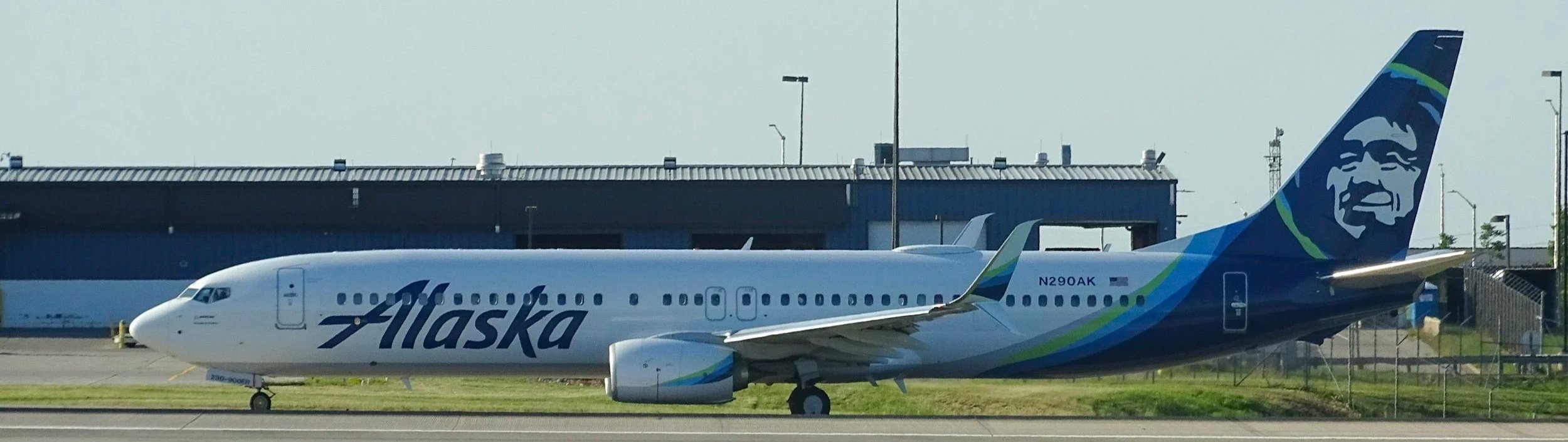
Delta SkyMiles may have been my first love, but now I’m an Alaska convert. Their recurring sales scratch the itch for a bargain, but I also value the ability to regularly book flights to Japan with great value. Plus, I get to take these award flights with elite status thanks to Alaska’s distance-based option to earn status.
Who is Atmos best for?
Atmos Rewards points are great for:
Those who want all-around value and potential status, even with just one or two cards
Those who have a regular travel partner
If you really want to maximize a large card portfolio or want to use your miles to fly from the West Coast to Europe, you might prefer other programs.
How to redeem Atmos points – lazily
Atmos points stand out for the number of low-effort ways they can be redeemed.
Award chart redemptions
Alaska Atmos still uses an award chart, which makes redemptions far more predictable than fully dynamic programs (although availability is never guaranteed). In broad terms, and in my experience, economy awards tend to run around 60,000 miles round-trip from the East Coast to Europe, and closer to 75,000 miles from the West Coast or for flights from either coast to East Asia. Exact pricing depends on the specific airport pair and operating airline—flights on Alaska’s own metal are sometimes cheaper, but can also price higher than partner awards.
I have always found great availability from my home in San Francisco to Japan for 75,000 miles round-trip, although some high-demand dates can be more expensive or on less-favorable routes (e.g. connecting flights on American Airlines instead of direct flights on Japan Airlines).
Business-class pricing is less consistent, but still relatively understandable. When seats are available, business-class awards can fall in the 50,000–75,000 mile range one-way, although these deals can be hard to find. Availability can be sporadic, and is often best close to departure and just as the booking window opens, nearly a year out. But when you can find it, pricing is often reasonable by today’s standards (but slightly higher than American’s AAdvantage program).
Global Getaways promotions
In addition to standard award pricing, Alaska occasionally runs Global Getaways, which are limited-time award sales offering steeply discounted economy awards to select destinations. These deals aren’t predictable and don’t cover every route, but when they appear, they can offer excellent value with very little effort. I flag these in the free LazyPoints newsletter when they come around.
Award search engines
Alaska is usually well-represented on paid award search tools like Roame or Seats.aero. This makes it relatively easy to conduct a broad search for a great redemption if you have Atmos points.
Brute force searches
Alaska’s award search tool is generally excellent, offering a flexible date calendar search to help you find the best rates on award flights.
If you are new to Atmos, you can start by searching for Oneworld hubs, as you might be more likely to find a partner award to those locations.
How to earn Atmos points
There is a fairly limited universe of Atmos-earning cards. Alaska itself offers the Summit, Ascent, and Hawaiian card. Bilt points, meanwhile, are transferable to Alaska at a 1:1 ratio. Bilt offers three different credit cards—the Blue, Obsidian, and Palladium—although you can only hold one Bilt card at any given time.
These cards offer bonuses on several spending categories:
3x on dining (Summit, Obsidian)
3x on foreign purchases (Summit)
3x on rent via Bilt, with a 3% transaction fee (Summit, Ascent)
2x on gas, EV charging station, local transit, cable and select streaming services (Ascent)
2x on gas, dining, & groceries (Hawaiian)
2x on travel (Obsidian)
2x on all purchases (Palladium)
Some limitations apply; check the terms and conditions.
Note that you can earn 10% more points on the Summit and Ascent cards with a qualifying Bank of America account, while the Bilt cards can earn ~1x additional points per dollar or more through Bilt’s “point accelerator” or housing rewards. This is my personal setup: 3.3x on dining and foreign purchases on the Summit, and 3x on all other purchases with the Bilt Palladium and point accelerator. That’s a powerful setup with just two cards, and one without a ton of credits to track, either.
Beyond credit cards and flying, some easy ways to earn Atmos or Bilt points include Lyft rides and (if you have Bilt elite status) Rakuten Rewards.

How to get status with Alaska, Lazily
Alaska status is based on a single metric: status points. You can unlock entry-level Silver status after earning 20,000 status points, while Gold status is unlocked after earning 40,000 status points. You can choose to earn status points based on distance flown, and Alaska awards one status point for each mile flown on award flights.
The Atmos Summit card provides a 10,000-status point headstart each year on card renewal, so that and 10,000 miles in award flights (roughly the round-trip distance between California and Japan) is enough to unlock Silver status. Depending on your spending habits, it may be possible to hit Gold status with just award flights and card spending—Atmos co-branded credit cards also earn toward status: 1 status point for every $2 spent on the Summit, or for every $3 spent on an Ascent or Hawaiian card.
Common pitfalls and alternatives
Flying solo. Alaska’s credit cards in general, but especially the Summit, justify most of their annual fees with companion benefits. If you want an airline card but can’t take advantage of those benefits, you might be better off with Delta, American, or even United.
Flying from the West Coast to Europe. Unfortunately, Alaska’s distance-based award chart can result in pricy transatlantic redemptions for some. You can mitigate this within Atmos by using Global Getaways for Europe redemptions, or by using Bilt points for Europe trips if you have them. But if your travel plans are Europe-centric, American AAdvantage and Delta SkyMiles often have lower points costs.
Wanting to hyperaccumulate. Atmos and Bilt offer a simple and rewarding set-up, but if you want to cycle through welcome bonuses on a wide array of cards and choose from a wide portfolio for the highest possible earning rate in many different spending situations, other partnerships like Citi and AAdvantage may have more to offer.
Lazy Take 🦥
If you want simple, reliable earning and value and don’t mind giving up bonus churning and every-dollar maximization, Atmos is ideal.
If you care more about deep discounts, look at Delta SkyMiles instead, or American AAdvantage for award chart flights to Europe from the West Coast.